Modern engineering teams do not just build products; they build evidence. Every prototype, firmware revision, circuit board, sensor package, battery module, or mechanical assembly must be tested, measured, logged, compared, and improved. The right test and measurement software turns raw signals into decisions, helping engineers move faster without sacrificing accuracy, traceability, or confidence.
TLDR: The best test and measurement software depends on your team’s hardware, data requirements, automation needs, and compliance environment. Tools such as NI LabVIEW, MATLAB, Python-based stacks, Keysight PathWave, and TestStand are popular because they combine data acquisition, automation, analysis, and reporting. Engineering teams should prioritize interoperability, scalability, ease of scripting, and long-term maintainability when choosing a platform.
Why Test and Measurement Software Matters
Engineering decisions are only as reliable as the measurements behind them. A test bench with excellent instruments but poor software can still produce inconsistent, hard-to-repeat results. Conversely, well-designed software can automate complex procedures, synchronize multiple devices, reduce operator error, and present results in a way that is easy to understand.
For teams developing electronics, automotive systems, aerospace hardware, medical devices, industrial equipment, or consumer products, test and measurement software often becomes the backbone of the validation process. It connects oscilloscopes, data acquisition devices, power supplies, signal generators, environmental chambers, sensors, and databases into a unified workflow.
The goal is not simply to collect data. The goal is to collect the right data, at the right time, with enough context to make it actionable.
What Makes Great Test and Measurement Software?
Before comparing specific tools, it is useful to define what “best” really means. The best software for one engineering team may be completely wrong for another. A small robotics startup, for example, may value flexibility and low cost, while a regulated aerospace manufacturer may prioritize validation, documentation, and standardized processes.
Strong test and measurement platforms typically offer:
- Hardware compatibility: Support for oscilloscopes, DAQ modules, spectrum analyzers, power meters, sensors, cameras, and industrial communication protocols.
- Automation: The ability to run repeatable test sequences without manual intervention.
- Data logging: Reliable capture of measurements with timestamps, metadata, and configuration details.
- Analysis tools: Built-in or extensible functions for filtering, statistics, signal processing, curve fitting, and visualization.
- Reporting: Automatic generation of pass or fail results, charts, tables, and compliance documentation.
- Scalability: Support for single-benchtop experiments as well as multi-station production testing.
- Maintainability: Code, configurations, and test procedures that can be understood and updated by future engineers.
1. NI LabVIEW
NI LabVIEW is one of the most recognized platforms in test and measurement. Its graphical programming environment allows engineers to build applications by wiring together functional blocks rather than writing traditional text-based code. This makes it especially attractive for teams working closely with hardware, real-time systems, and data acquisition.
LabVIEW is widely used in research labs, production test systems, automated validation benches, and industrial monitoring applications. Its greatest strength is the way it integrates with National Instruments hardware, although it can also communicate with many third-party instruments through common standards such as VISA, TCP/IP, serial, and GPIB.
Best for: Teams building custom automated test systems, hardware-in-the-loop setups, and DAQ-heavy applications.
Notable strengths:
- Excellent data acquisition support
- Graphical development environment
- Strong integration with NI hardware
- Large ecosystem of drivers and toolkits
- Useful for real-time and FPGA-based applications
Consideration: LabVIEW can become difficult to maintain if projects are not well structured. Teams should establish coding standards early, especially for larger systems.
2. NI TestStand
While LabVIEW is often used to build test modules and instrument control logic, NI TestStand is designed for test sequence management. It helps engineering teams define test steps, manage execution flow, handle limits, log results, and generate reports.
TestStand is particularly valuable when tests must be repeated across multiple units, product variants, or manufacturing stations. It supports integration with LabVIEW, Python, C, C++, .NET, and other languages, making it a practical framework for coordinating mixed technology environments.
Best for: Manufacturing test, validation teams, and organizations that need structured, repeatable test execution.
Why teams like it: TestStand separates test logic from test execution. This makes it easier to update limits, rearrange test sequences, and maintain traceability without rewriting low-level instrument code.
3. MATLAB and Simulink
MATLAB is a favorite among engineers who need powerful numerical analysis, modeling, visualization, and algorithm development. It is particularly strong in signal processing, control systems, communications, image processing, and mathematical modeling. When paired with Simulink, it becomes a robust environment for model-based design and simulation.
In test and measurement, MATLAB is often used to analyze logged data, automate instruments, build custom dashboards, or validate algorithms before deployment. It supports communication with many lab instruments and can interface with hardware through toolboxes and APIs.
Best for: Teams that need advanced analysis, modeling, simulation, and algorithm validation.
Notable strengths:
- Exceptional mathematical and statistical capabilities
- High-quality plotting and visualization
- Strong signal processing libraries
- Useful for control systems and model-based workflows
- Broad academic and industrial adoption
Consideration: Licensing costs can be significant, especially when multiple specialized toolboxes are required.
4. Python-Based Test and Measurement Stacks
For many modern engineering teams, Python has become the default language for test automation and measurement analysis. It is flexible, widely understood, and supported by a huge ecosystem of libraries. With packages such as NumPy, SciPy, pandas, Matplotlib, PyVISA, and pytest, teams can create highly capable test systems without depending on a single vendor platform.
Python is especially attractive for startups, research teams, and software-oriented engineering groups. It works well for instrument control, data processing, automated validation, database integration, web dashboards, and continuous integration pipelines.
Best for: Teams that want flexibility, low licensing costs, and integration with modern software workflows.
Advantages:
- Open-source ecosystem
- Excellent for scripting and automation
- Easy integration with databases, APIs, and cloud services
- Strong data science and machine learning libraries
- Compatible with version control and CI/CD practices
Potential drawback: Python-based systems require disciplined architecture. Without standards for drivers, configuration, error handling, and reporting, scripts can become scattered and difficult to maintain.
5. Keysight PathWave
Keysight PathWave is a suite of software tools designed to support electronic design, test automation, measurement analysis, and workflow management. It is especially relevant for teams working in RF, wireless communications, high-speed digital systems, power electronics, and semiconductor testing.
PathWave connects well with Keysight instruments and provides applications for measurement automation, data analytics, and test management. For teams already using Keysight hardware, it can create a more integrated and efficient testing environment.
Best for: Electronics teams using Keysight instruments, especially in RF, 5G, semiconductor, and high-speed validation work.
Why it stands out: PathWave is built around the realities of complex electronic measurements, where accuracy, calibration, signal integrity, and repeatability are crucial.
6. DewesoftX
DewesoftX is a powerful data acquisition and analysis platform used in automotive, aerospace, structural testing, acoustics, vibration, power analysis, and industrial measurement. It is known for its polished user interface, real-time visualization, and strong integration with Dewesoft DAQ hardware.
Teams use DewesoftX for applications such as vehicle testing, noise and vibration analysis, rotating machinery diagnostics, and durability studies. It is particularly effective when engineers need to capture many synchronized channels and review results quickly.
Best for: Mechanical, automotive, aerospace, and vibration testing teams.
Key strengths:
- Real-time measurement visualization
- Excellent multi-channel DAQ support
- Strong vibration and acoustic analysis features
- User-friendly interface for test engineers
7. DASYLab
DASYLab is a visual programming environment for data acquisition, control, and analysis. Like LabVIEW, it allows users to create measurement workflows using graphical blocks, but it is often appreciated for its relative simplicity.
It is useful for teams that need to build test setups quickly without developing a full software application from scratch. Engineers can create workflows for acquiring, processing, displaying, and storing data, making it suitable for labs, education, and industrial monitoring.
Best for: Quick DAQ applications, laboratory experiments, and users who prefer graphical configuration over traditional coding.
8. INCA from ETAS
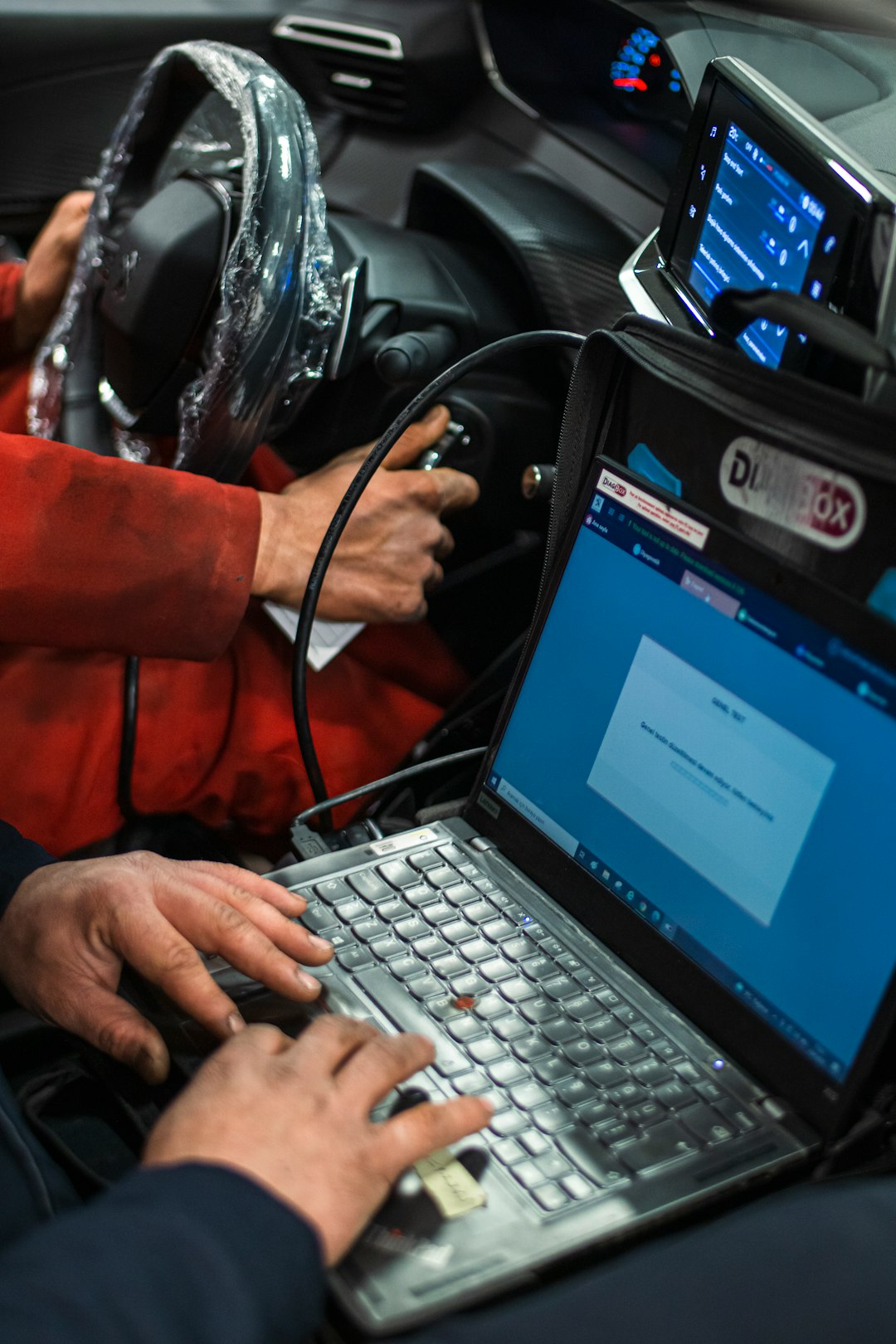
INCA is widely used in the automotive industry for ECU calibration, diagnostics, and measurement. Developed by ETAS, it supports vehicle development teams working with embedded control units, powertrains, emissions systems, and advanced driver assistance functions.
INCA enables engineers to measure ECU signals, calibrate parameters, manage datasets, and validate behavior in real vehicles or test benches. It is a specialized tool, but for automotive calibration teams, it is often essential.
Best for: Automotive ECU calibration, vehicle testing, and embedded control validation.
How to Choose the Right Software
Selecting test and measurement software should start with a clear understanding of your workflow. The best platform is not necessarily the one with the longest feature list; it is the one that fits your instruments, engineers, test procedures, and business constraints.
Ask these questions before committing:
- What hardware must the software control? Check compatibility with current and future instruments.
- Who will maintain the system? A graphical tool may suit hardware engineers, while Python may suit software-heavy teams.
- How repeatable must the tests be? Production and compliance environments usually need stronger sequencing and reporting.
- How much data will be generated? High-speed and long-duration tests require careful data management.
- Are there regulatory requirements? Medical, aerospace, and automotive teams may need audit trails, validation, and strict documentation.
- Will the system need to scale? A quick benchtop script may not become a reliable production test platform without redesign.
Recommended Software by Team Type
Different engineering teams tend to benefit from different software choices:
- Electronics validation teams: LabVIEW, TestStand, MATLAB, Keysight PathWave
- Manufacturing test teams: TestStand, LabVIEW, Python, Keysight PathWave
- Research and development labs: MATLAB, Python, LabVIEW, DASYLab
- Automotive engineering teams: INCA, DewesoftX, MATLAB, LabVIEW
- Mechanical and vibration teams: DewesoftX, MATLAB, Python
- Startups and software-driven teams: Python, MATLAB, selected open-source tools
Do Not Ignore Data Management
One of the most common mistakes engineering teams make is focusing on test execution while underestimating data management. A test system is only valuable if results can be found, trusted, compared, and reused. File naming conventions, metadata, calibration records, operator notes, test conditions, software versions, and hardware configurations all matter.
As products become more complex, teams increasingly need centralized databases, searchable result repositories, automated report generation, and dashboards that track trends over time. This is especially important for reliability testing, production yield analysis, and long-term product improvement.
The Rise of Automated and Connected Testing
Test and measurement software is moving toward more connected, automated, and intelligent workflows. Engineering teams are integrating test benches with issue trackers, requirements systems, cloud databases, and continuous integration pipelines. In embedded systems, for example, automated tests may run every time firmware changes. In manufacturing, test data may feed directly into quality analytics dashboards.
Machine learning is also beginning to influence measurement workflows, particularly in anomaly detection, predictive maintenance, and pattern recognition. However, the fundamentals remain the same: accurate measurements, repeatable procedures, and clear interpretation.
Final Thoughts
The best test and measurement software for engineering teams is the one that transforms testing from a manual burden into a repeatable, insight-driven process. LabVIEW and TestStand remain excellent choices for structured hardware automation. MATLAB excels in analysis and modeling. Python offers unmatched flexibility and affordability. Keysight PathWave, DewesoftX, DASYLab, and INCA shine in more specialized environments.
Ultimately, great software does more than capture numbers. It helps engineering teams understand behavior, prove performance, diagnose failures, and build better products. In a world where development cycles are shorter and systems are more complex, choosing the right test and measurement platform is not just a technical decision; it is a strategic advantage.