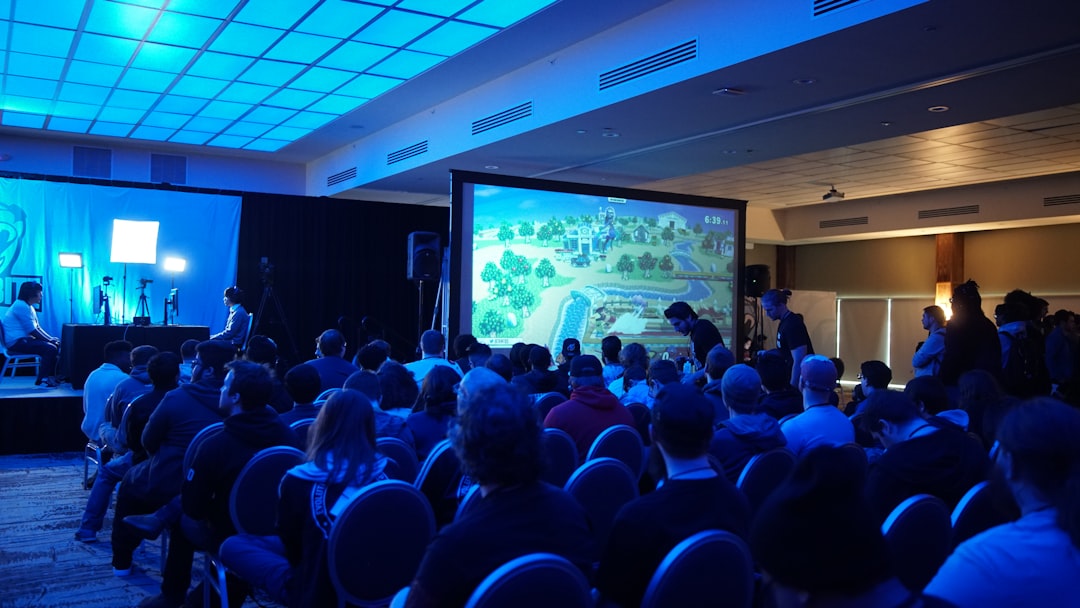
Cambridge has long been more than a picturesque university city; it is a meeting place for ideas that travel far beyond lecture halls, college chapels, libraries, and public auditoriums. The Cambridge Speakers Series, broadly understood as the city’s tradition of curated public talks, academic lectures, literary conversations, and civic forums, reflects that spirit: thoughtful people speaking to curious audiences about science, politics, culture, ethics, technology, and the future.
TLDR: The Cambridge Speakers Series showcases influential voices from academia, public life, literature, science, and activism. Its most memorable talks often combine expert knowledge with urgent questions about society, technology, climate, democracy, and human purpose. The best insights are not only intellectual but practical, encouraging audiences to think more critically and engage more actively with the world.
Why Cambridge Is a Natural Home for Big Ideas
Few places carry the intellectual symbolism of Cambridge. The city is associated with centuries of scholarship, scientific breakthroughs, philosophical debate, and literary achievement. From the legacy of Isaac Newton and Charles Darwin to the modern work of researchers in artificial intelligence, medicine, economics, and climate science, Cambridge has cultivated a culture in which questions are treated as seriously as answers.
That atmosphere gives any speaker series in Cambridge a distinctive character. Audiences often arrive expecting more than entertainment. They want context, challenge, evidence, and a sense that they are participating in a larger conversation. Speakers, in turn, tend to bring their strongest material because they know they are addressing listeners who value depth.

Notable Themes Across the Talks
The most compelling talks in Cambridge often cluster around several recurring themes. These subjects reflect both global concerns and the city’s academic strengths:
- Science and discovery: Talks on cosmology, genetics, neuroscience, public health, and climate modeling frequently attract large audiences.
- Democracy and public life: Speakers examine populism, misinformation, civil liberties, constitutional change, and the responsibilities of citizenship.
- Technology and ethics: From artificial intelligence to data privacy, Cambridge discussions often ask not only what can be built, but what should be built.
- Literature and storytelling: Novelists, historians, poets, and critics explore how narrative shapes identity, memory, and moral imagination.
- Climate and sustainability: Researchers and activists connect scientific evidence with policy choices and everyday behavior.
What makes these themes powerful is the way they overlap. A talk about artificial intelligence may become a conversation about education and inequality. A lecture on climate science may turn into a debate about finance, law, and intergenerational justice. Cambridge audiences tend to appreciate this interconnectedness.
Science Talks: Wonder Joined to Responsibility
Some of the most memorable Cambridge talks are scientific in subject but philosophical in effect. Speakers in physics and astronomy often begin with the scale of the universe, then move toward questions of human significance. In this tradition, a discussion of black holes, dark matter, or the origins of time becomes more than a technical explanation; it becomes a reflection on curiosity itself.
Similarly, talks in biology and medicine have grown increasingly urgent. Researchers discussing vaccine development, pandemic preparedness, cancer treatment, or gene editing are not simply presenting data. They are asking society to consider how scientific progress should be governed, shared, and trusted. The insight that emerges is clear: scientific literacy is now a civic skill.
Cambridge audiences often respond strongly to speakers who can translate complex research without oversimplifying it. The best talks make listeners feel both humbled and empowered: humbled by the complexity of nature, empowered by the possibility of understanding it.
Public Affairs and the Art of Argument
Cambridge has also been a stage for political thinkers, diplomats, economists, journalists, and human rights advocates. These talks tend to be lively because they deal with unsettled questions: What keeps democracies healthy? How should societies respond to migration? Can global institutions still solve global problems? What does free speech require in a polarized age?
The most valuable public affairs talks do not merely confirm what the audience already believes. Instead, they sharpen the quality of disagreement. A strong speaker lays out evidence, acknowledges tradeoffs, and resists easy slogans. This is especially important in an era when public debate is often compressed into social media fragments. A Cambridge-style lecture restores time and space to argument.

Literary Voices and the Power of Perspective
Writers bring a different kind of authority to a speakers series. Novelists, poets, memoirists, and historians often speak less like lecturers and more like guides through experience. Their insights come through character, memory, metaphor, and the patient reconstruction of worlds that might otherwise be forgotten.
Cambridge literary talks frequently explore questions such as: Who gets to tell history? How does language shape belonging? What is the relationship between private grief and public events? These conversations remind audiences that knowledge is not confined to laboratories and policy papers. Stories are also instruments of understanding.
One recurring insight from literary speakers is that empathy is not automatic. It must be practiced through attention. Reading, listening, and conversation all train people to notice the complexity of lives unlike their own. In that sense, literary events play a civic role as well as an artistic one.
Technology, AI, and the Future of Human Judgment
In recent years, talks on artificial intelligence, automation, and digital culture have taken on special prominence. Cambridge, with its strong research community and technology sector, is a natural setting for these conversations. Speakers often address the promise of AI in medicine, education, environmental modeling, and accessibility, while also warning about bias, surveillance, job disruption, and the erosion of trust.
The strongest insight from these talks is that technology is never neutral in practice. Tools are designed by people, funded by institutions, regulated by governments, and used within unequal societies. Therefore, the future of technology depends not only on engineers but also on ethicists, teachers, lawyers, artists, and citizens.
A recurring message is worth highlighting: human judgment becomes more important, not less, as machines become more capable. The question is not whether technology will shape the future; it is whether society will shape technology with wisdom.
Climate Conversations: From Evidence to Action
Climate-related talks in Cambridge often stand out because they combine rigorous science with moral urgency. Researchers explain rising temperatures, biodiversity loss, extreme weather, and ocean change in precise terms. Activists and policy experts then connect that evidence to energy systems, urban planning, food production, and global inequality.
What makes these events compelling is the refusal to treat climate change as a distant abstraction. Speakers increasingly focus on adaptation, justice, and practical transition. They ask what universities, businesses, local councils, and individuals can do now. The most persuasive voices avoid both despair and false comfort. Instead, they present climate action as difficult, necessary, and still meaningful.
What Audiences Take Away
The lasting value of the Cambridge Speakers Series is not found only in famous names or packed venues. It lies in the habits of mind that good talks encourage. Listeners leave with new facts, but also with better questions. They encounter disagreement without hostility, expertise without arrogance, and imagination without escapism.
Several lessons tend to resonate across the series:
- Complex problems require interdisciplinary thinking. Science, politics, economics, and culture cannot be separated neatly.
- Clarity is not the same as simplicity. The best speakers make difficult ideas accessible while preserving their depth.
- Public conversation matters. Democracies depend on people who can listen, question, and revise their views.
- Ideas become powerful when they lead to action. Insight is most valuable when it changes behavior, policy, or perspective.
A Continuing Tradition of Curiosity
The Cambridge Speakers Series represents a living tradition: the belief that public thought can be serious, engaging, and consequential. Whether the speaker is a Nobel laureate, a novelist, a climate scientist, a philosopher, a journalist, or a young activist, the essential promise remains the same. A room gathers, a question is posed, and for an hour or two, attention becomes communal.
In a distracted world, that is no small thing. Cambridge’s notable talks remind us that ideas still need places to be spoken aloud, tested, challenged, and shared. Their greatest insight may be this: knowledge is not only something we possess; it is something we practice together.